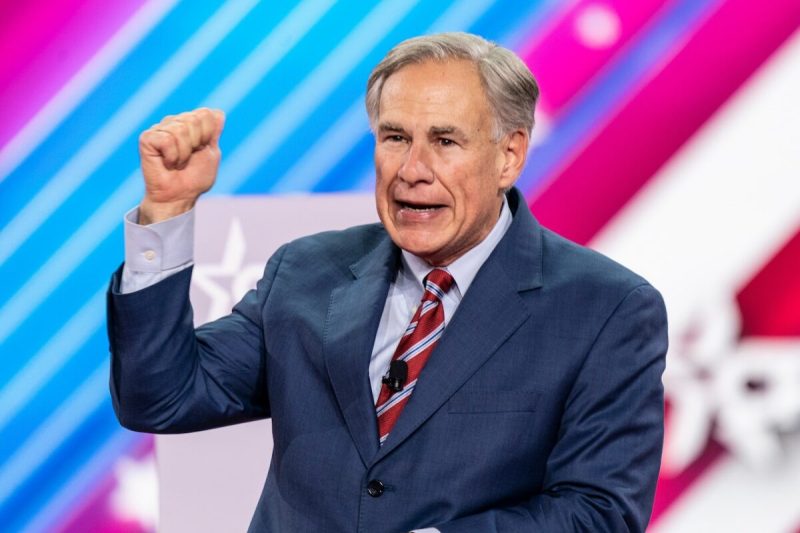
Public universities across the state can’t seek new visas without the Texas Workforce Commission’s permission from now until the end of the 2027 legislative session under a new directive from Republican Gov. Greg Abbott.
Texas Republican Gov. Greg Abbott has directed public universities across the state to stop filing new H-1B visa petitions and announced an investigation into how they are being used.
The federal program allows employers to hire foreign workers for specialized jobs that require at least a bachelor’s degree, such as professors, researchers, and doctors.
Under Abbott’s directive, public universities and state agencies can’t initiate or file new H-1B visa petitions without written permission from the Texas Workforce Commission through the end of the next legislative session on May 31, 2027.
He also ordered higher education institutions to submit detailed reports to the commission, including the number of new or renewed H-1B visa petitions filed in 2025, the number of H-1B visa holders currently sponsored, job titles, countries of origin, and visa expiration dates.
Abbott is also directing universities to provide documentation showing they made an effort to give qualified Texans a reasonable opportunity to apply for positions filled by H-1B visa holders.
He said the move is about putting Texans first.
“The economy of Texas should work for the benefit of Texas workers and Texas employers,” reads the directive. “In light of recent reports of abuse in the federal H-1B visa program, and amid the federal government’s ongoing review of that program to ensure American jobs are going to American workers, I am directing all state agencies to immediately freeze new H-1B visa petitions as outlined in this letter.”
“State government must lead by example and ensure that employment opportunities—particularly those funded with taxpayer dollars—are filled by Texans first,” he added.
Abbott’s claim that the H-1B program has been abused echoes a proclamation from President Donald Trump made last year, despite there being no reported data or evidence of rampant fraud or abuse in the program.
The decision elicited criticism from academic advocates, who say it will threaten innovation, economic growth, and the student experience at Texas universities.
“Regardless of background, Texas professors drive innovation and prepare the next generation of leaders to join the workforce,” said Brian Evans, president of Texas AAUP-AFT. “Abbott’s order will hurt the student experience and diminish the value of teaching and research at Texas institutions of higher education.”
Evans said that the state’s university medical centers will be hit the hardest.
“Patients don’t care where their doctors and nurses are from, as long as they’re getting the best possible care. Texas needs its public universities to continue being the economic engines driving the state, not mere vehicles for Governor Abbott’s political agenda,” he said.
Rep. Gene Wu (D-Houston), chair of the Texas House Democratic Caucus, called Abbott’s decision “government by temper tantrum.”
“Governor Abbott is continuing his campaign to make Texas hostile to anyone who doesn’t look like him. Combined with the racist anti-alien land law Republicans passed this session, the message is clear: If you’re an immigrant who followed every rule, Texas Republicans still don’t want you here,” Wu said in a statement.
“Our universities and hospitals will lose world-class talent to states that aren’t run by xenophobes while Abbott chases headlines from the nativist fringe,” he added.
Last year, President Donald Trump, whose second term has been dominated by mass deportation efforts, imposed a $100,000 one-time fee for new applicants of the H-1B visa.
“Messing with the H-1B system was a bad idea when President Trump first tried it. It’s even more reckless when it’s a governor undermining his own state’s workforce,” Evans said.
In April, the Trump administration took aim at student visas, revoking visas and changing the immigration status of more than 200 international students across Texas universities.